02 / IN PRACTICE
Warranty replacements with one signature
GembaOS is a zero-trust governance runtime for enterprise AI agents: policy-decided access, single-use clearance tokens bound to exact parameters, and accountable human approvals, running on-premises or in a private VPC. This scenario is the warranty replacement: the simple case of a case, where most claims should take one signature and the exceptions should be obvious.
How do you approve warranty claims quickly without approving the wrong ones?
GembaOS reads the unit by its serial number (only a serial registered to the customer who writes) and derives the facts the route needs: days since purchase, the unit’s warranty length, earlier repairs, files on record. Inside the warranty, with a picture, under the value limit and with no earlier repair, the service lead’s own signature is the whole route. Out of warranty, a repeat, a larger value or a suspected misuse adds the customer-support supervisor.
| Before | With GembaOS | |
|---|---|---|
| Checking the warranty | Look up the order, then the terms, then do the date math | Days since purchase and warranty length derived from the unit’s record |
| Photos | Chased by email | Attached at intake; asked for in a document round when the lead needs more |
| The decision | A replacement approved in a ticket comment | A consult finding with the signature: defect confirmed, misuse suspected, needs inspection, out of warranty |
| Someone else’s serial | Sometimes processed | Treated as if it did not exist |
What happens, step by step?
| Step | Who | What is recorded |
|---|---|---|
| 1. Intake | The customer writes with the serial and a photo | Their words and the picture; the ticket |
| 2. Facts | The runtime reads the unit | Days since purchase, warranty length, repairs, files |
| 3. Route | The playbook compares them | Service lead alone, or lead then supervisor |
| 4. Sign | The service lead, with a finding | The finding and the reason in the signature chain |
| 5. Execute | The runtime, under a clearance token | The unit read again, then the replacement approved once |
| 6. Answer | The customer’s ticket | The official answer |
What does it look like?
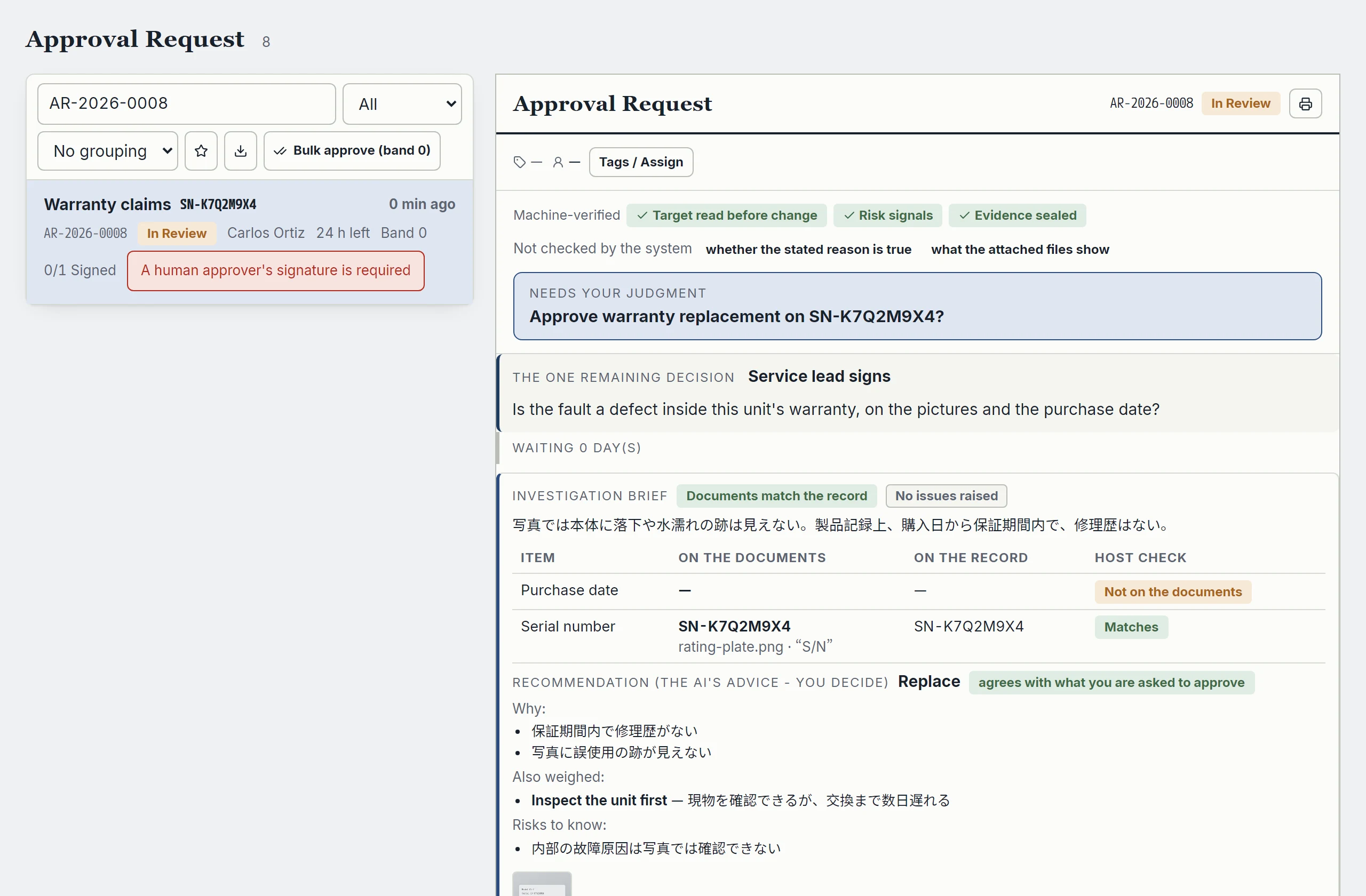
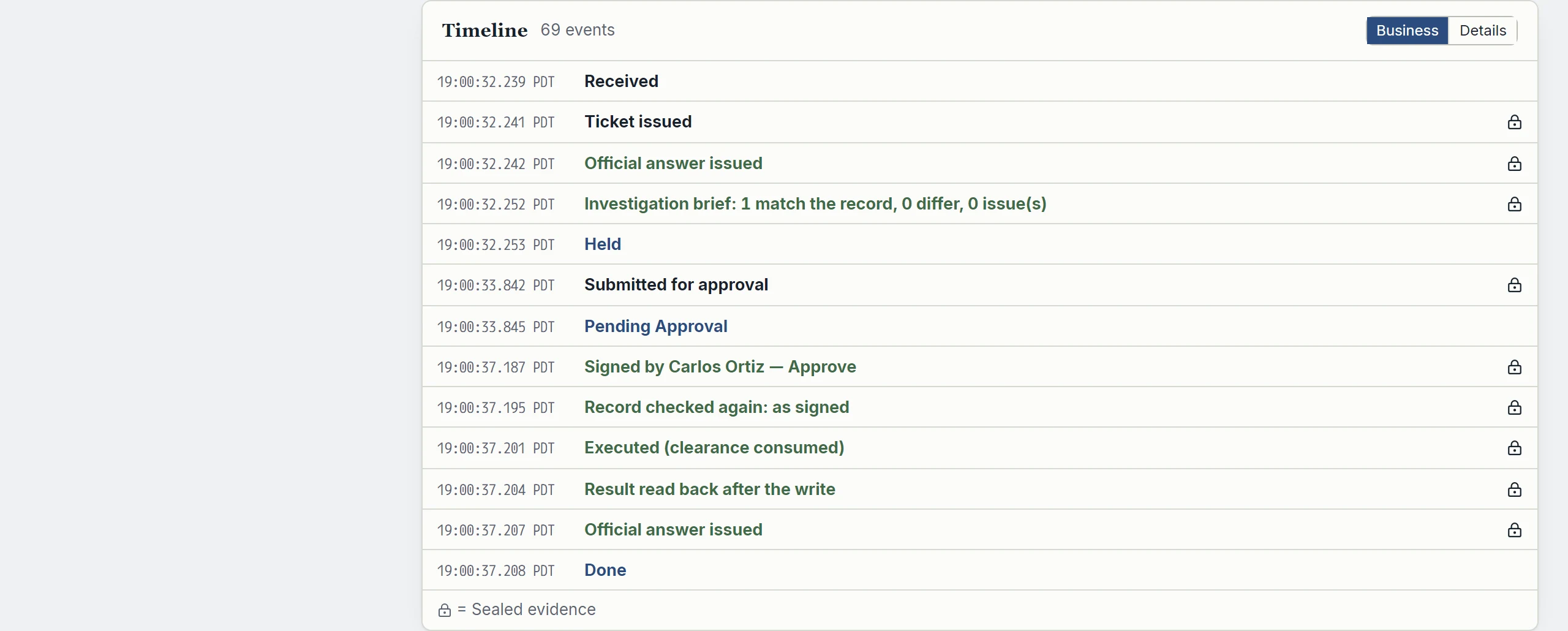
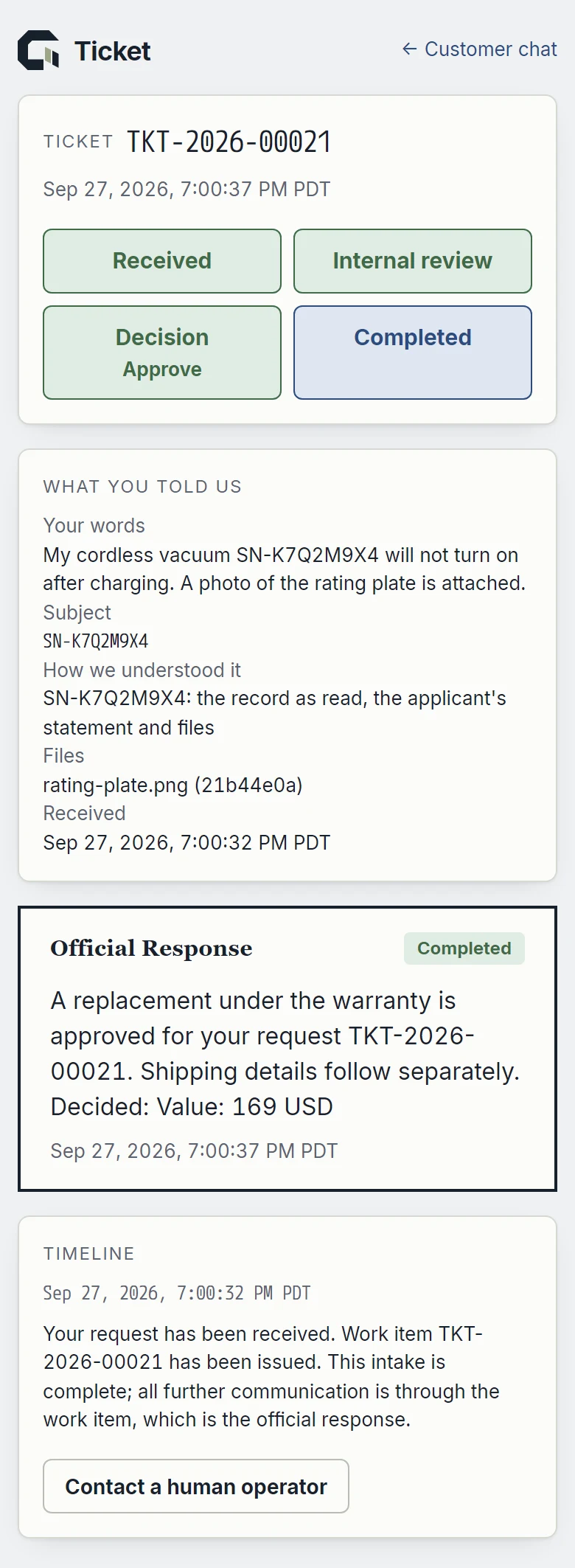
What do we need to start?
- Your warranty terms per product line, and who may approve a replacement or a goodwill exception.
- Read access to registered units and one call that approves the replacement, through the REST or SQL adapter.
- The customer channel: the ticket page, email, or a web widget on your support site.
Related: claims that take weeks, refunds under an approval limit, security and deployment.
Questions this note answers
Can a warranty claim be approved without a supervisor?
Yes, when the playbook says so. In the shipped one the service lead alone signs when the unit is inside its warranty, a picture is on file, the value is modest, there was no earlier repair and nothing is flagged.
How is the warranty period checked?
The runtime reads the unit's record and derives the days since purchase and the unit's own warranty length on the company's business calendar. The route compares the two; no model reads a date off a receipt.
What if the photo is not enough?
The service lead signs with the finding "needs inspection". The request goes back and the customer is asked for photos or a video on their ticket.
Last updated: · GembaOS v0.2