02 / IN PRACTICE
Company secretary changes with a signed record
GembaOS is a zero-trust governance runtime for enterprise AI agents: policy-decided access, single-use clearance tokens bound to exact parameters, and accountable human approvals, running on-premises or in a private VPC. This scenario is the company-secretary change: a client company appoints or replaces a director, moves its registered office or has a new significant controller, and the secretarial firm has to check the documents, complete its due diligence, update the register and file, within the deadline.
Where do the 15 days go?
In Hong Kong, the appointment or cessation of a director or company secretary must be notified to the Companies Registry on Form ND2A within 15 days (Companies Registry FAQ), and most companies keep a significant controllers register. The form is not the hard part. Chasing is: the consent is unsigned, the ID copy is missing, the address proof is out of date. A licensed provider acting as secretary also carries customer due diligence and its records.
AI can fill in forms and send reminders. When someone asks who checked this change and when it was released, the answer is usually spread across emails and a spreadsheet. GembaOS makes that step one approval with signatures and a record.
| Before | With GembaOS | |
|---|---|---|
| The request | An email with attachments, forwarded on | One work item: the client’s own words and the change request as read from the register system |
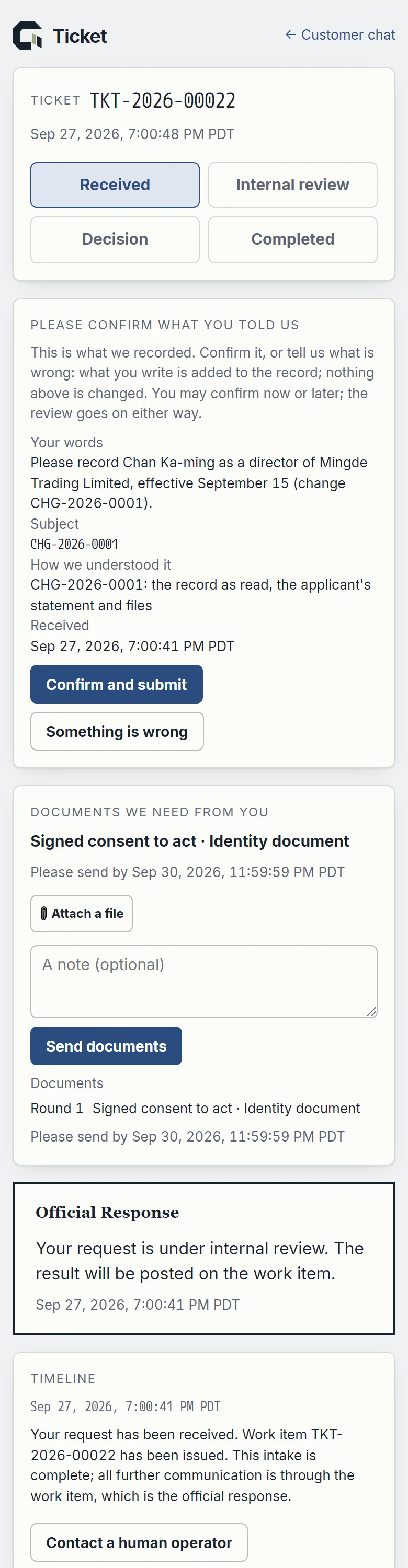
| Chasing the consent | “Could you send it again?” | A document round on the client’s ticket, with a due date |
| Due diligence | Another team, another checklist | The compliance officer signs the same approval with a finding |
| Release | Someone remembers it was done | One approval request with every signer’s finding and reason |
| The register entry | Updated by hand afterward | Written once under a clearance token, after the change request is read again |
How does a new director go through, step by step?
| Step | Who | What is recorded |
|---|---|---|
| 1. Request | The client’s contact names the change request and describes it | Their words; only their own company’s change can be named |
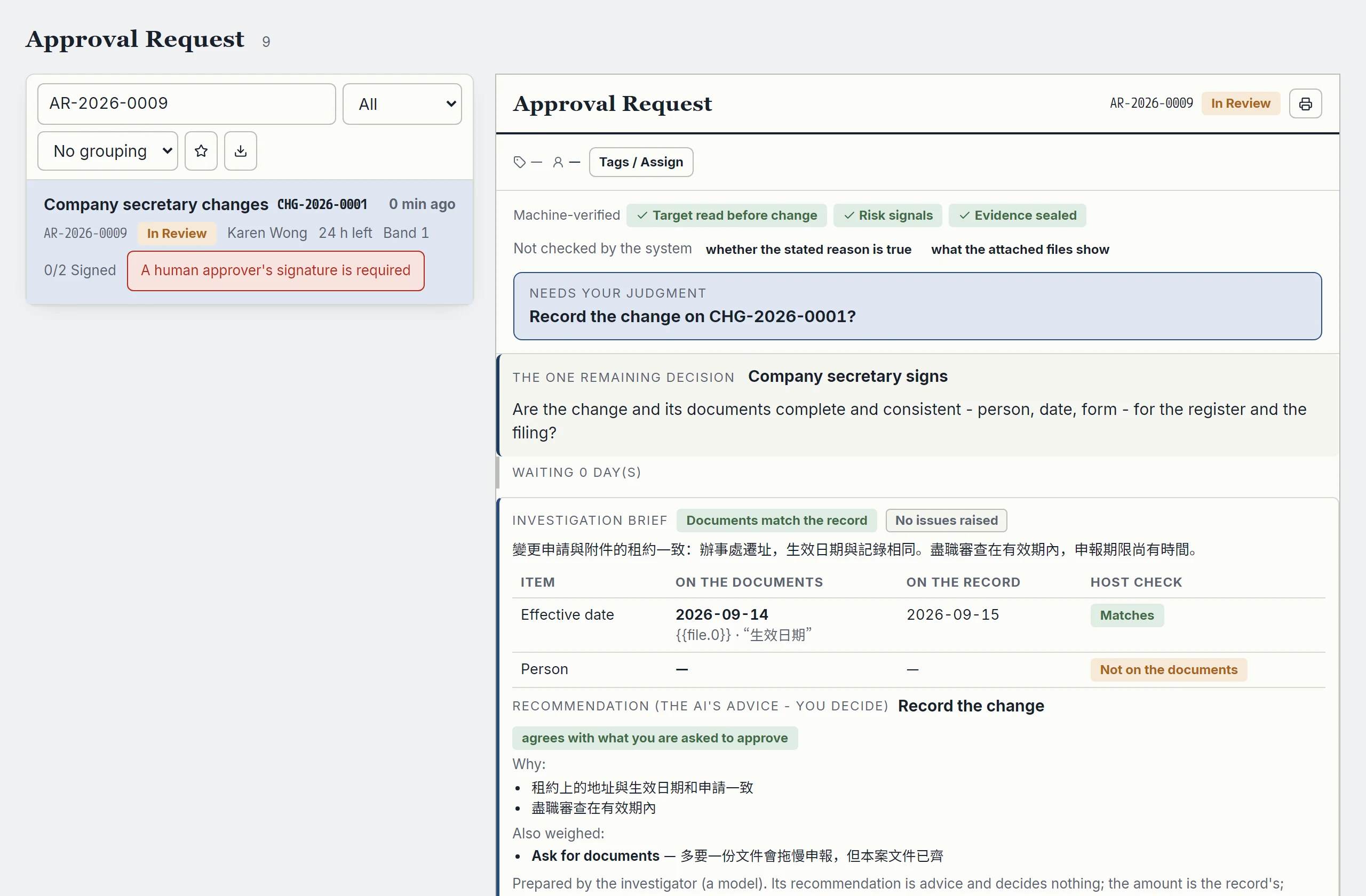
| 2. Route | The runtime reads the change request and drafts the approval | The facts (change type, form, effective date, registry deadline, days until due, days of due diligence left, risk rating) and the route |
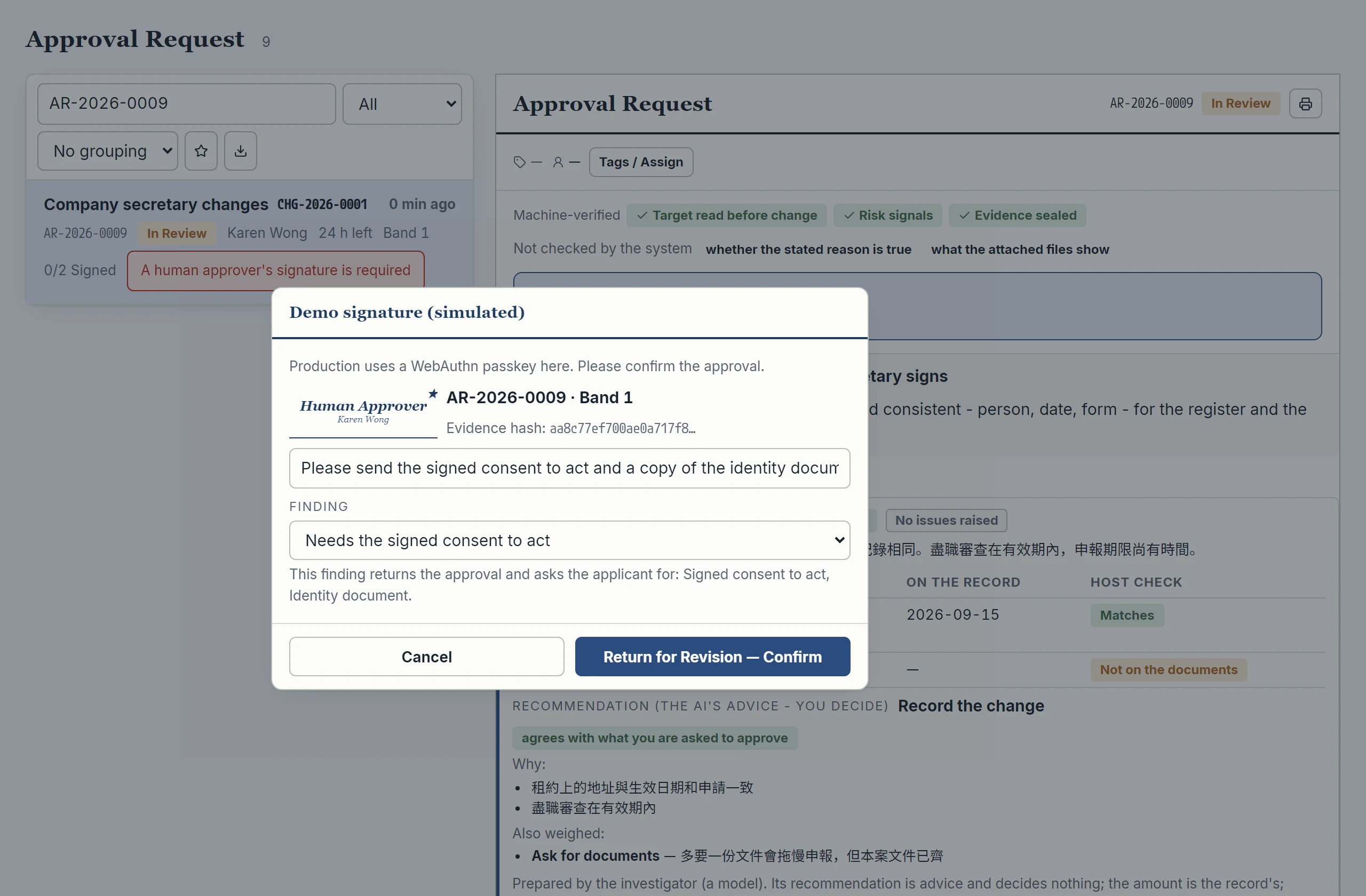
| 3. Finding | The company secretary signs “needs the signed consent to act” | The finding returns the approval and opens a round for the client |
| 4. Documents | The client uploads the signed consent on the ticket | The round, the files, when they arrived |
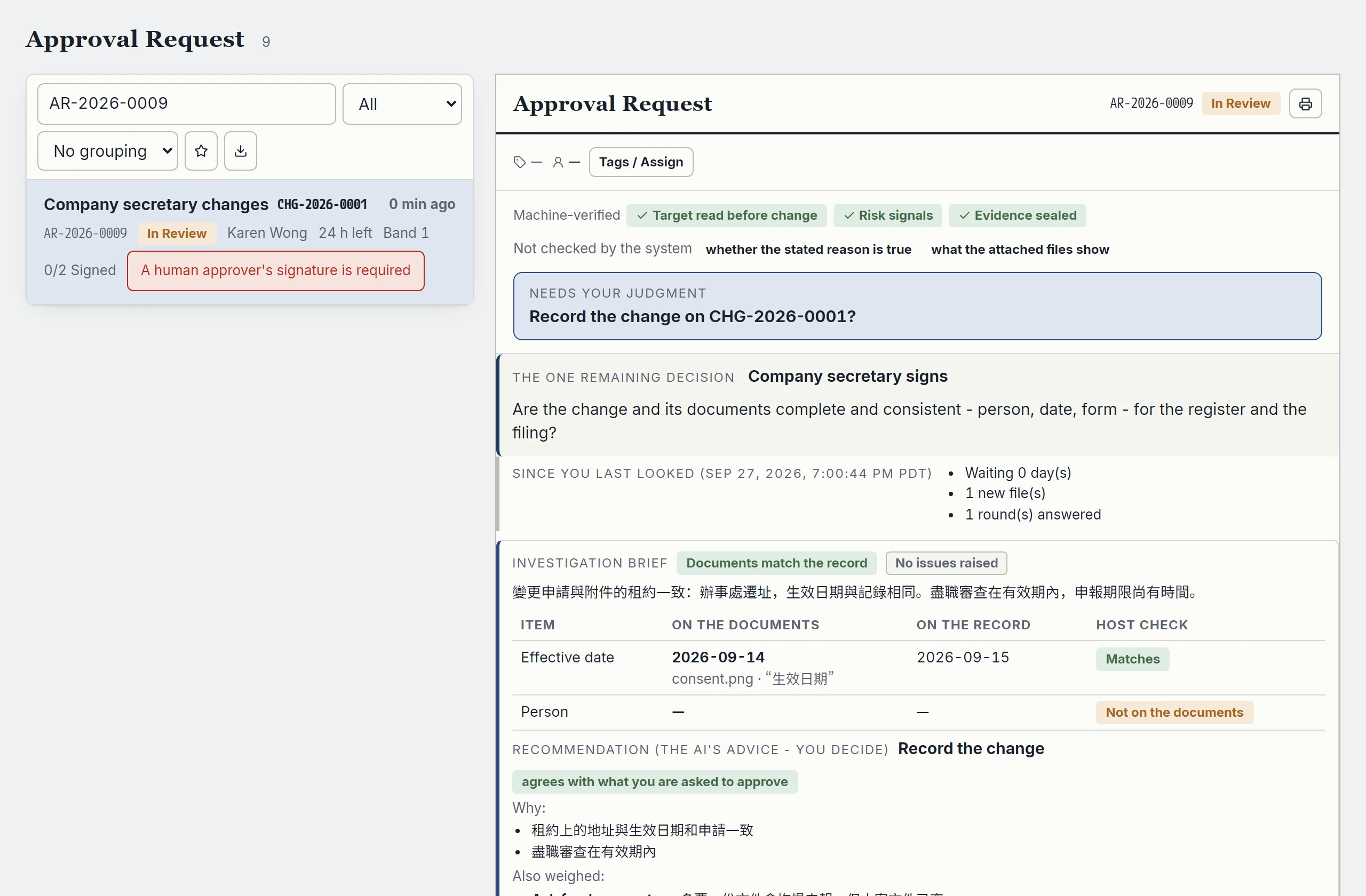
| 5. Resubmit | The same approval, read again | What changed since the secretary last looked: a new file, the round answered |
| 6. Sign | The secretary (documents complete), the compliance officer (due diligence cleared) | The signature chain with two findings |
| 7. Execute | The runtime, under the clearance | The change entered in the register and the form marked ready to file; a person files it |
Where is the control point?
The record and the findings. What the change does (its type, the form to file) is a field of the change request, never a signer’s choice. The runtime reads it again right before it writes; if it was edited after a signature, the approval goes back and the register is not touched. Signers pick findings the playbook defines: “red flag” adds the compliance officer, “enhanced due diligence required” asks the client for the source of funds and an ownership chart. The client sees their own request, the documents asked of them and the answer, never the signers’ notes.
GembaOS does not screen names against sanctions lists and does not make the licensee’s judgment. It keeps each change’s facts in front of the people who sign, and records who signed what, and when.
What does it look like?
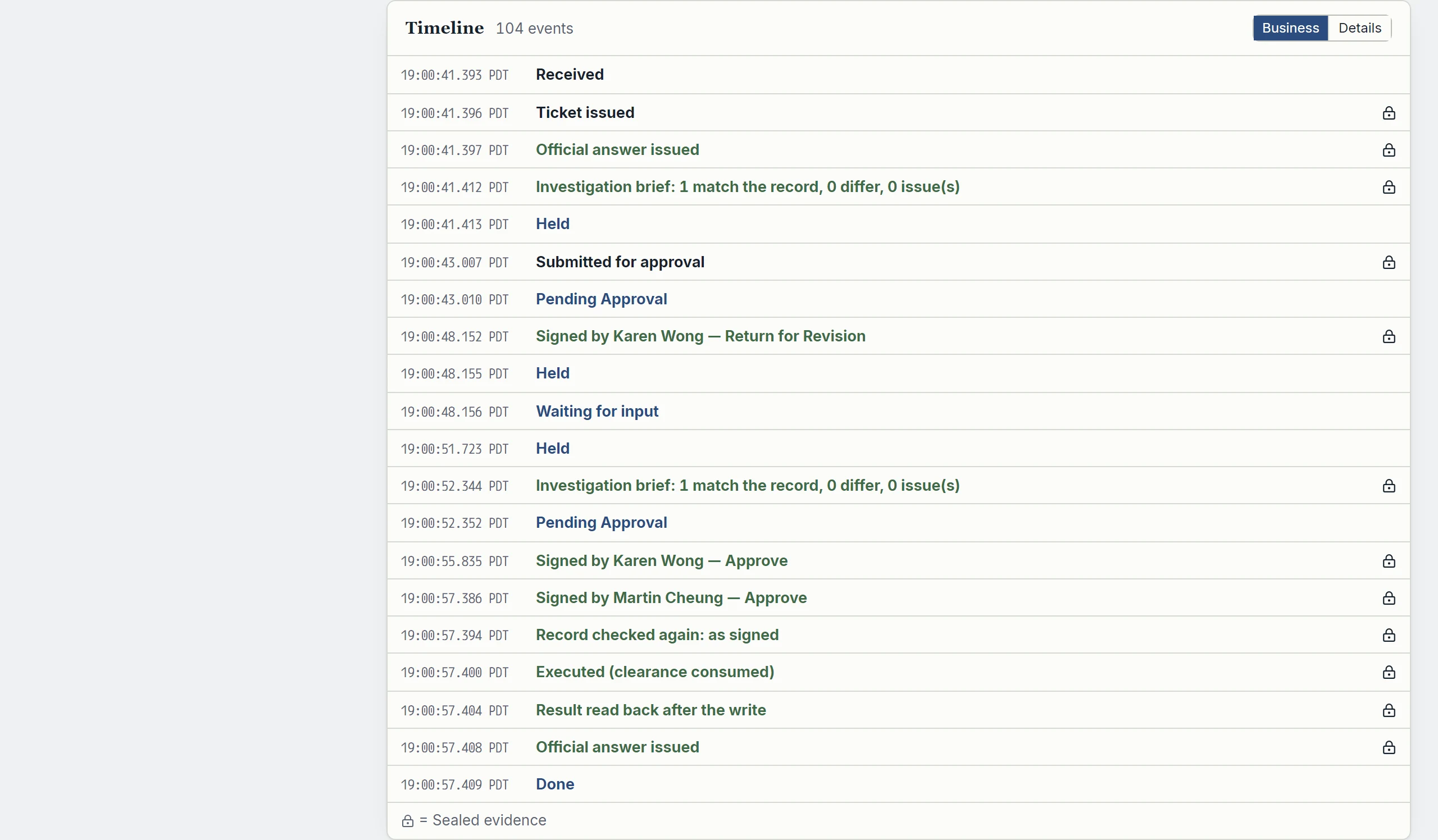
What do we need to start?
- Your firm’s practice as it is: which changes the secretary checks alone, and which need compliance too.
- Read access to change requests and one call that writes the register entry, through the REST or SQL adapter.
- The findings each role signs with, in your own words.
- A sign-in for client contacts, so the person asking for a change is who they say they are.
Related: procurement exceptions, claims that take weeks, the glossary.
Questions this note answers
Can an AI file Form ND2A for the company secretary?
GembaOS does not file it. After sign-off, it enters the change in the statutory register and marks the form ready to file; a person files it at the Companies Registry. GembaOS covers the part before filing: whether the documents are complete, who checked them and who released the change.
What if the client is slow to send the consent to act?
The secretary signs with the finding "needs the signed consent to act". The approval goes back and the client's ticket shows the request with a three-day due date. A missed date is recorded, never closed on its own; the registry deadline and the days left stay among the approval's facts.
Does every new director need the compliance officer?
In the shipped playbook, yes: a new director, a change of significant controller, lapsed due diligence or a higher-risk client adds the compliance officer after the secretary. An office move or a resignation with the documents on file, due diligence in date and no flag is the secretary's own signature. Your firm sets these conditions.
Last updated: · GembaOS v0.2