02 / IN PRACTICE
Nonconformance disposition with the reasons on record
GembaOS is a zero-trust governance runtime for enterprise AI agents: policy-decided access, single-use clearance tokens bound to exact parameters, and accountable human approvals, running on-premises or in a private VPC. This scenario is the nonconformance disposition: a lot is on hold, and someone has to decide whether it is used as is, reworked, scrapped or returned to the supplier, and be able to show why.
Why does the reason for a concession get lost?
A material review decision should record the nonconformance and its evidence, the disposition, the technical justification, the approvals it needed, who decided and when. Where the spec is the customer’s, a use-as-is disposition needs the customer’s approval before anything ships. The decisions themselves are made every day. What goes missing is the reason: the measurements sit in one file, the customer’s approval in an email, the sign-off in a form, and none of it reads as one case later.
AI is common in visual inspection and in summarizing inspection records. The step from detection to release is still a form and a spreadsheet. GembaOS makes that step one approval.
| Before | With GembaOS | |
|---|---|---|
| The request | A nonconformance report and emails about it | One work item: the engineer’s words and the report as read from the QMS |
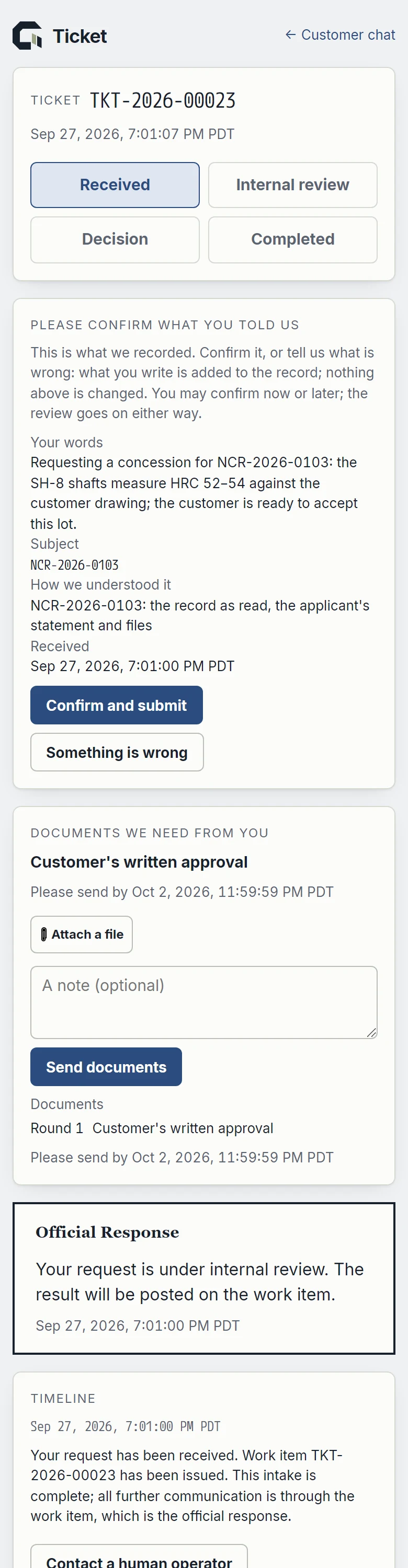
| Measurements, the customer’s approval | “Can you send more?” in a reply | A document round on the engineer’s ticket, with a due date |
| The decision | A signature box and a routing slip | One approval request with every signer’s finding and reason |
| Release from hold | By hand after the sign-off | Once, under a clearance token, after the report is read again |
How does a concession on a customer’s spec go through?
| Step | Who | What is recorded |
|---|---|---|
| 1. Request | The quality engineer names the report and gives the reason | Their words; only a report they raised can be named |
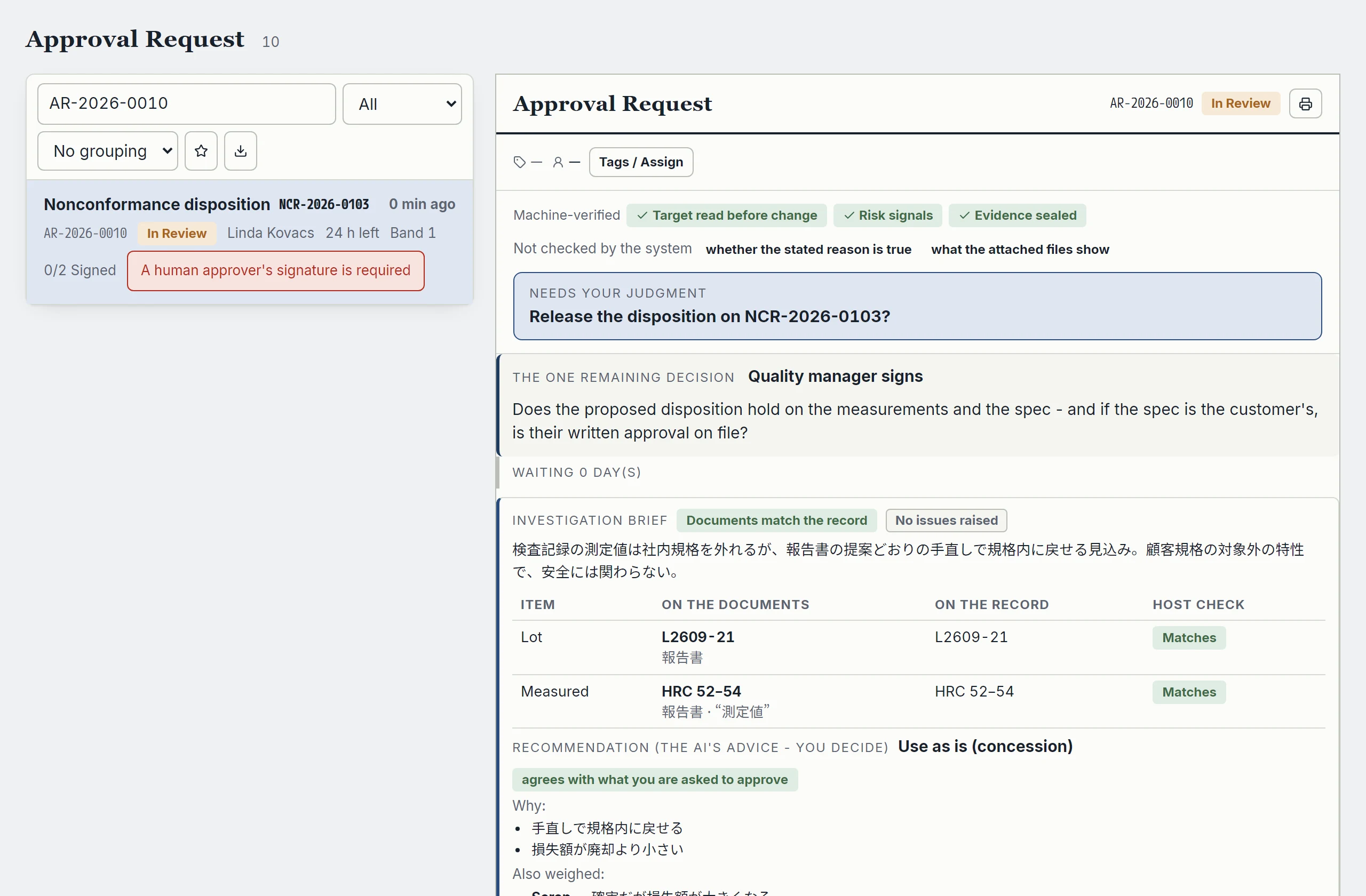
| 2. Route | The runtime reads the report and drafts the approval | The facts (proposed disposition, whose spec, value at stake) and the route |
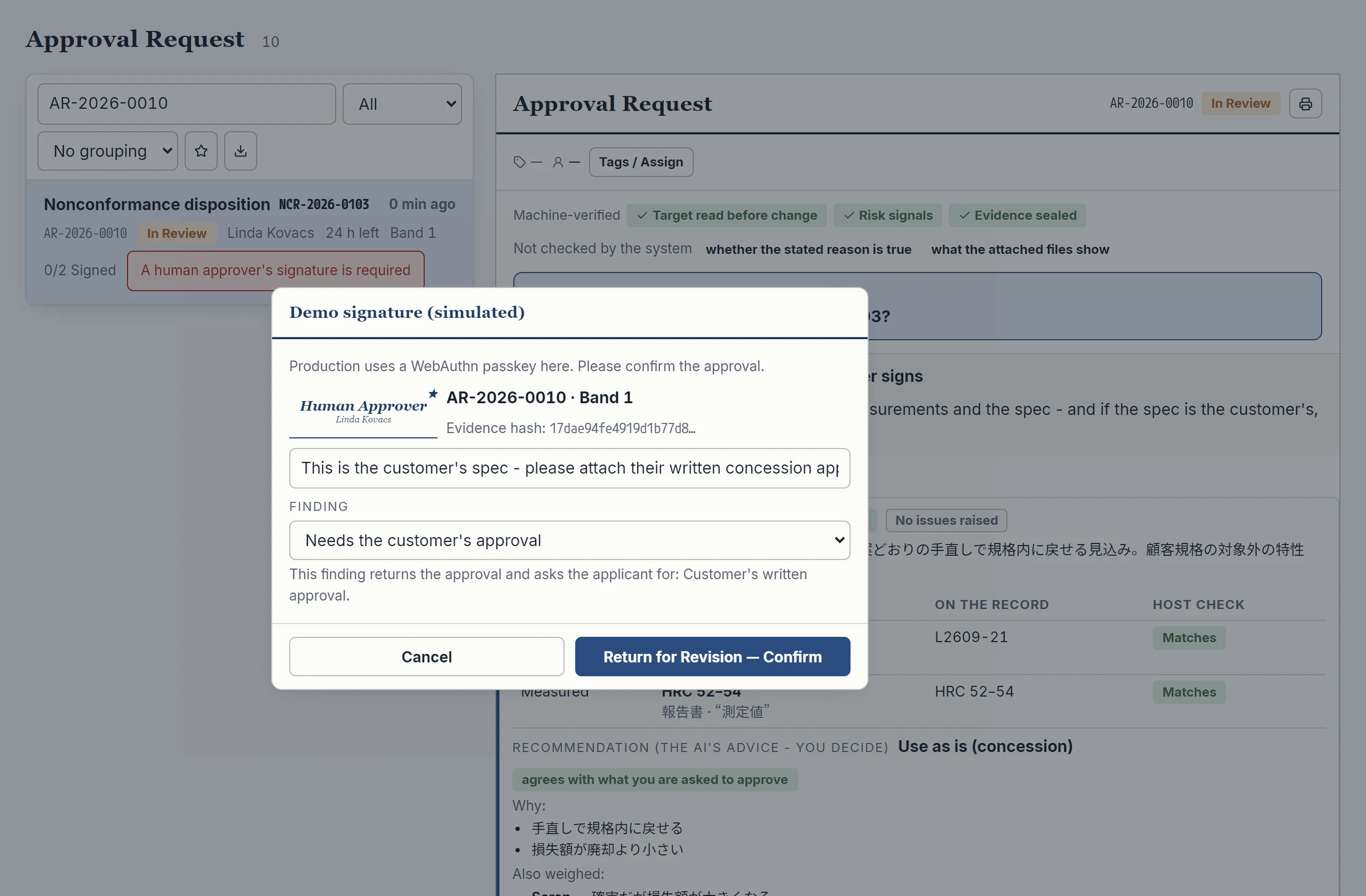
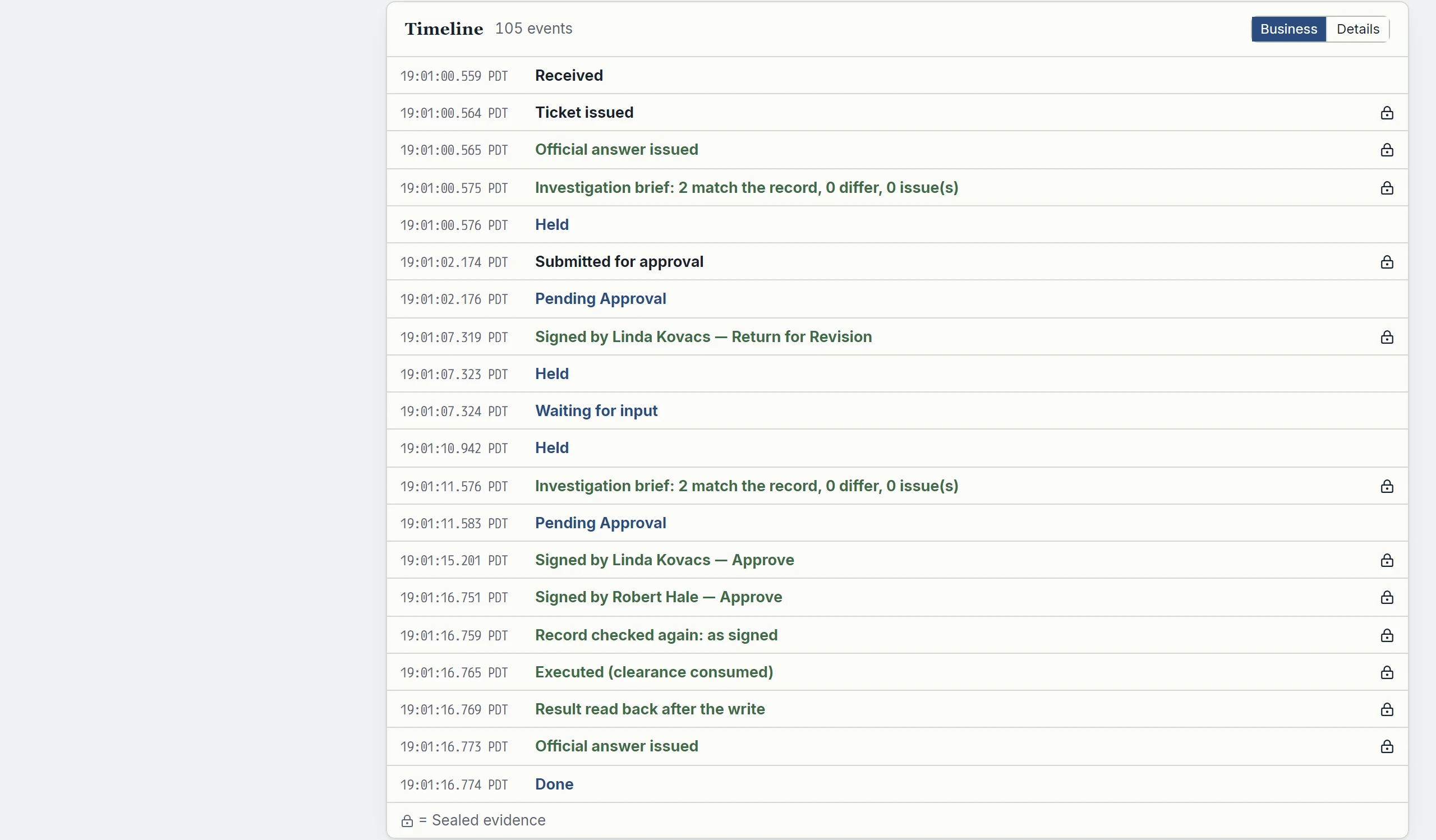
| 3. Finding | The quality manager signs “needs the customer’s approval” | The finding returns the approval and opens a round for the engineer |
| 4. Documents | The engineer attaches the customer’s written approval on the ticket | The round, the file, when it arrived |
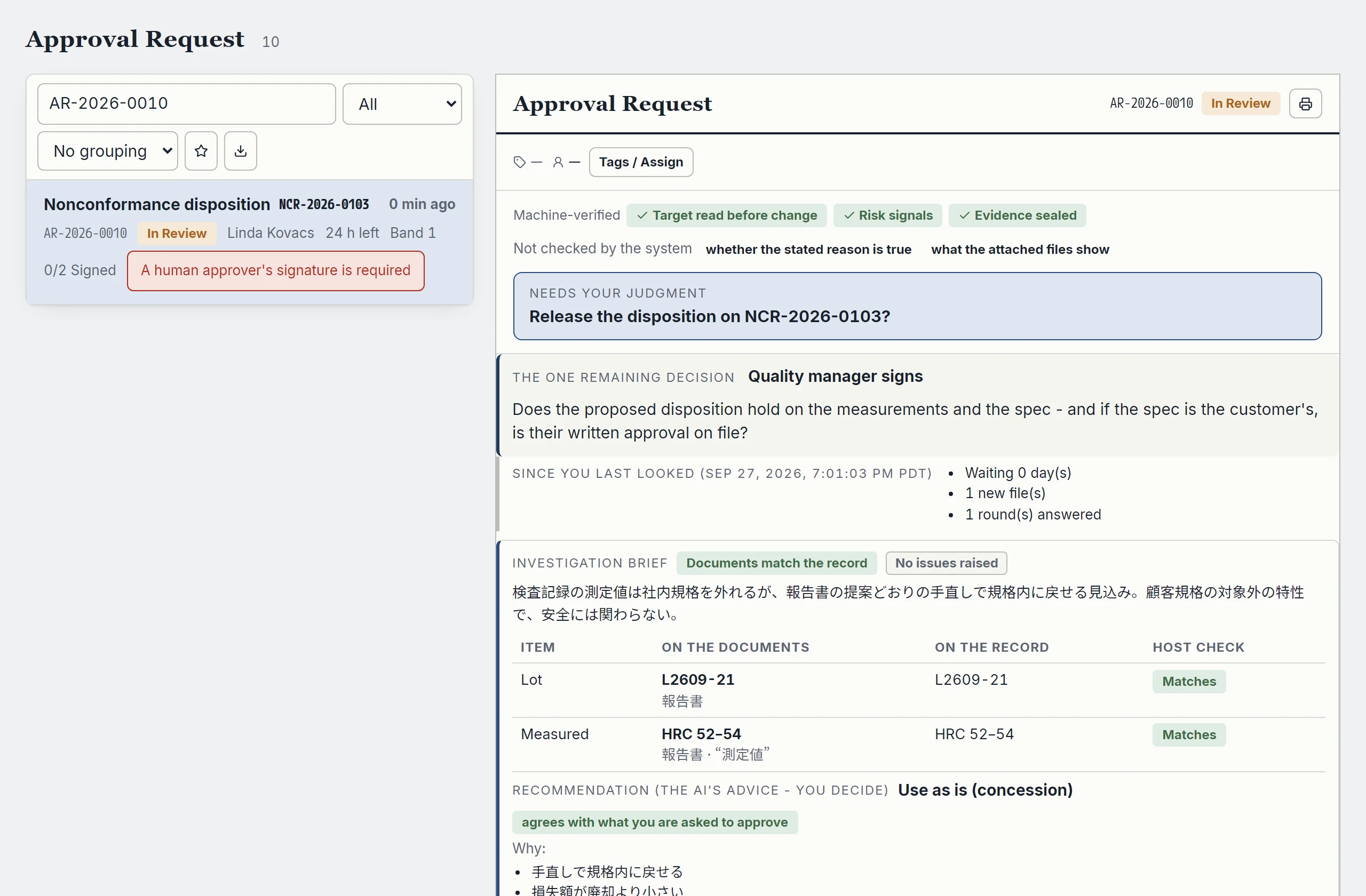
| 5. Resubmit | The same approval, read again | What changed since the manager last looked: a new file, the round answered |
| 6. Sign | The quality manager (disposition agreed), the plant manager (release) | The signature chain with two findings |
| 7. Execute | The runtime, under the clearance | The report compared with what was signed, then the lot released once |
Where is the control point?
The record and the findings. What is done (the disposition and the quantity) is a field of the nonconformance report, never a signer’s choice. Right before the release the report is read again; if the proposed disposition was edited after a signature, the approval goes back and the lot stays on hold. Only what was signed runs. Signers pick findings the playbook defines: “needs measurement data” asks the engineer for measurements, “disposition rejected” returns it to the person handling it.
GembaOS does not measure or judge the part. It keeps each disposition’s facts in front of the people who sign, and records who signed what, and when.
What does it look like?
What do we need to start?
- Your disposition procedure as it is: who signs which disposition, and when the customer must approve.
- Read access to nonconformance reports and one call that releases a lot, through the REST or SQL adapter.
- The findings each role signs with, in your own words.
- Employee sign-in through your identity provider, so the engineer is who they say they are.
Related: procurement exceptions, warranty replacements, the glossary.
Questions this note answers
Who approves a use-as-is disposition?
The people your quality procedures name. In the shipped playbook, rework or scrap on your own spec with a modest loss is the quality manager's own signature; use as is, a return to the supplier, a customer's spec or a larger loss adds the plant manager. Your company sets these conditions.
How does the customer's concession approval get onto the case?
The quality manager signs with the finding "needs the customer's approval". The approval goes back and the engineer's ticket asks for the customer's written approval. When it arrives, the same approval is resubmitted with the file and the round on it.
What if someone changes the disposition after it is signed?
Right before the lot is released, GembaOS reads the nonconformance report again and compares it with what the signers saw (status, proposed disposition, quantity, whether the spec is the customer's). If anything differs, the approval goes back and the lot stays on hold. Only what was signed runs.
Last updated: · GembaOS v0.2