02 / IN PRACTICE
Marketplace price changes signed by depth
GembaOS is a zero-trust governance runtime for enterprise AI agents: policy-decided access, single-use clearance tokens bound to exact parameters, and accountable human approvals, running on-premises or in a private VPC. This scenario is the offer price on a marketplace: an agent or a person proposes a new price for an Amazon listing, and the question is who agreed to how deep a change, and whether the price written is the one they saw.
Why is a price change an approval at all?
A price is live to buyers within minutes, and every order that follows is placed at it. The same action is routine at 3% and a business decision at 35%: the depth is what separates them. A listing priced wrong by mistake is paid for in either lost margin or cancelled orders.
| Before | With GembaOS | |
|---|---|---|
| A small adjustment | Anyone with seller access | Runs on its own inside the band, with an approval request on record |
| A real discount | A message to the storefront owner | The storefront owner signs the request |
| A deep discount | Whoever is online | The storefront owner and the finance director, in one signature chain |
| Two changes to the same offer | The last one wins, silently | The second request carries the open one among its facts; whichever lands second is sent back |
| Writing the price | By hand or by script | Once, under a clearance token, after the offer is read again |
What happens when two changes meet?
| Step | Who | What is recorded |
|---|---|---|
| 1. Nudge | The specialist proposes $126.99 from $129.99 | Inside the band: it runs, and the approval request stays on record |
| 2. Deep cut | The specialist proposes $84.99 from $126.99 | Over a fifth off: the storefront owner and the finance director must sign |
| 3. First signature | The storefront owner signs the deep cut | One of two signatures |
| 4. A second change | A weekend promotion at $119.99 is proposed and signed | Its facts record another request open on the same offer; it runs first |
| 5. Second signature | The finance director signs the deep cut | The chain is complete |
| 6. Re-read | GembaOS reads the offer before writing | The price is $119.99, not the $126.99 the signers saw: the clearance is voided, the request goes back, nothing is written |
Where is the control point?
The band and the re-read. The band is computed from the proposed price against the price the approver saw, and a flagged listing never reaches the automatic band. The specialist’s read of the offer never carries cost, supplier or the advertised-price floor. Right before the price is written, the offer is read again, and a price that moved since the signatures sends the request back instead of writing over it.
GembaOS does not pick prices and does not watch the marketplace for changes made elsewhere. It governs the changes made through it.
What does it look like?
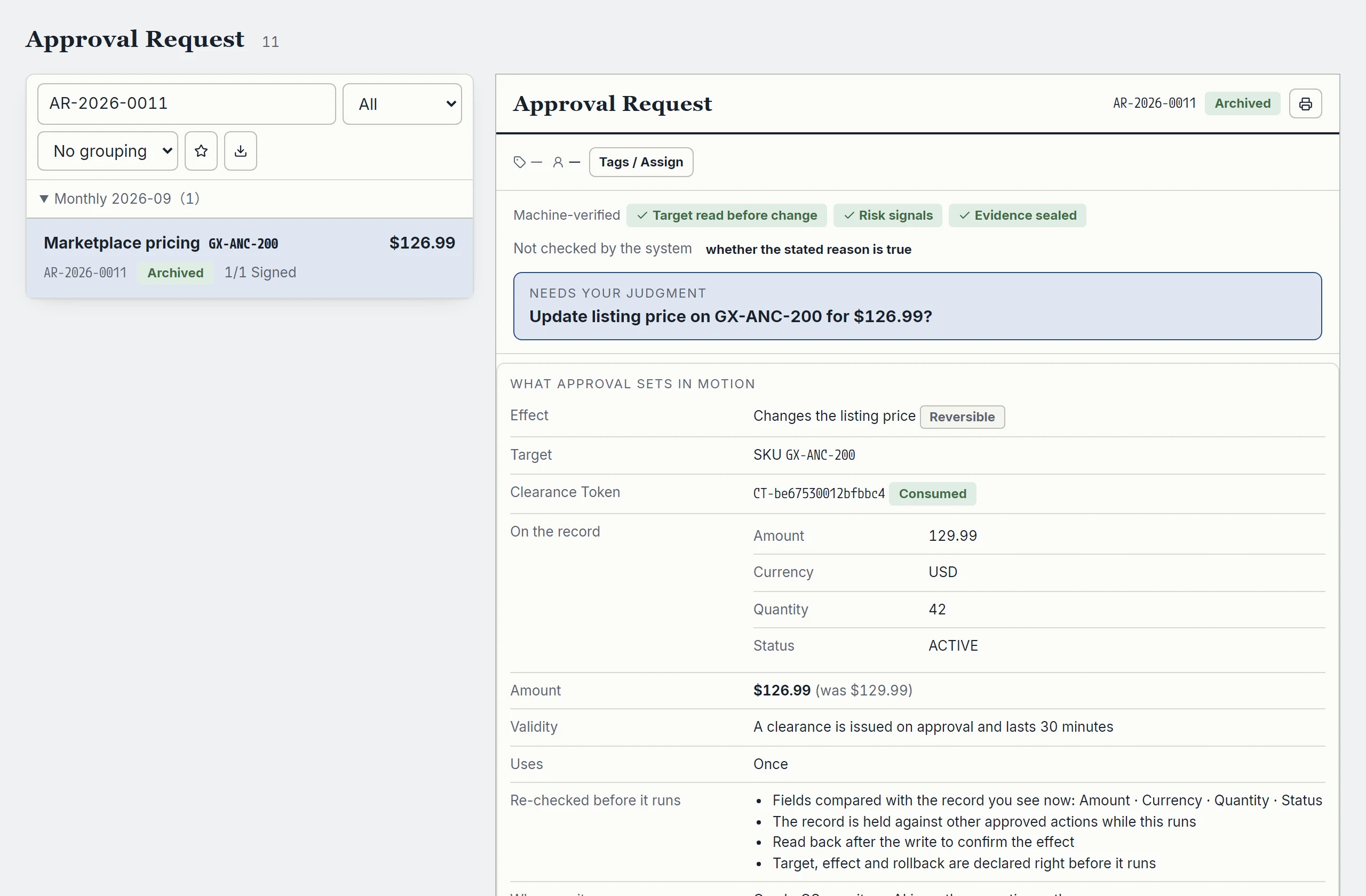
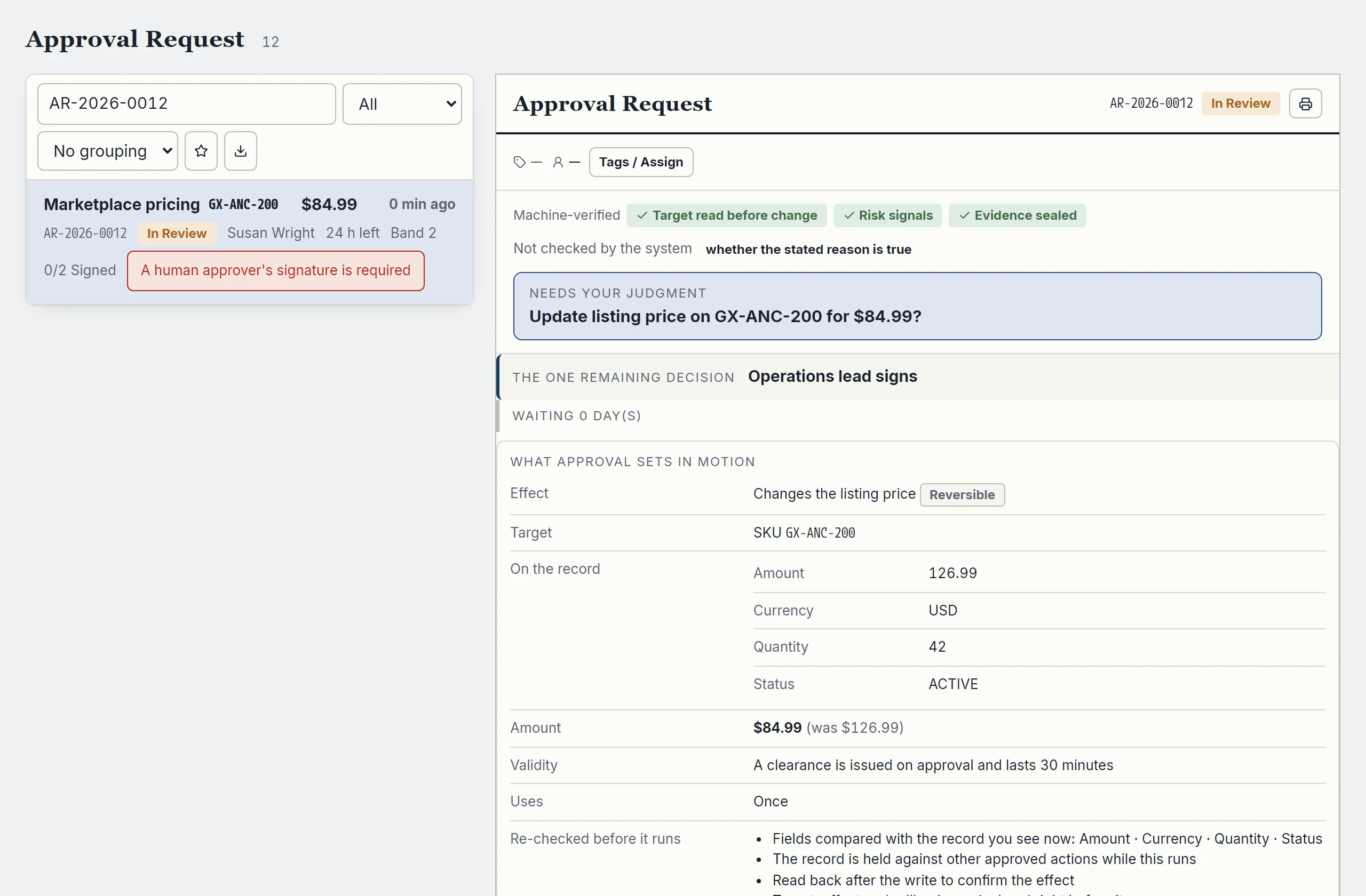
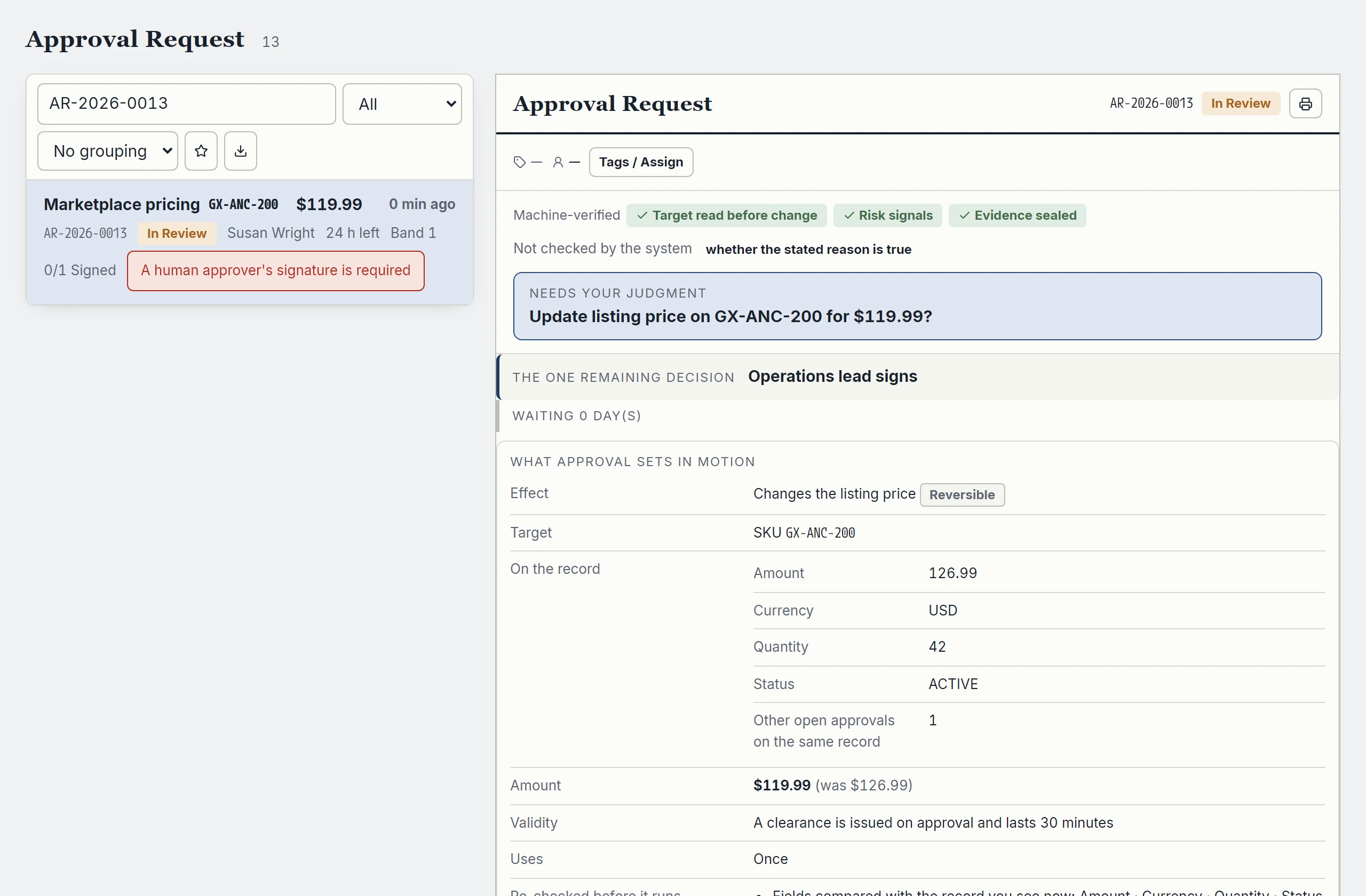
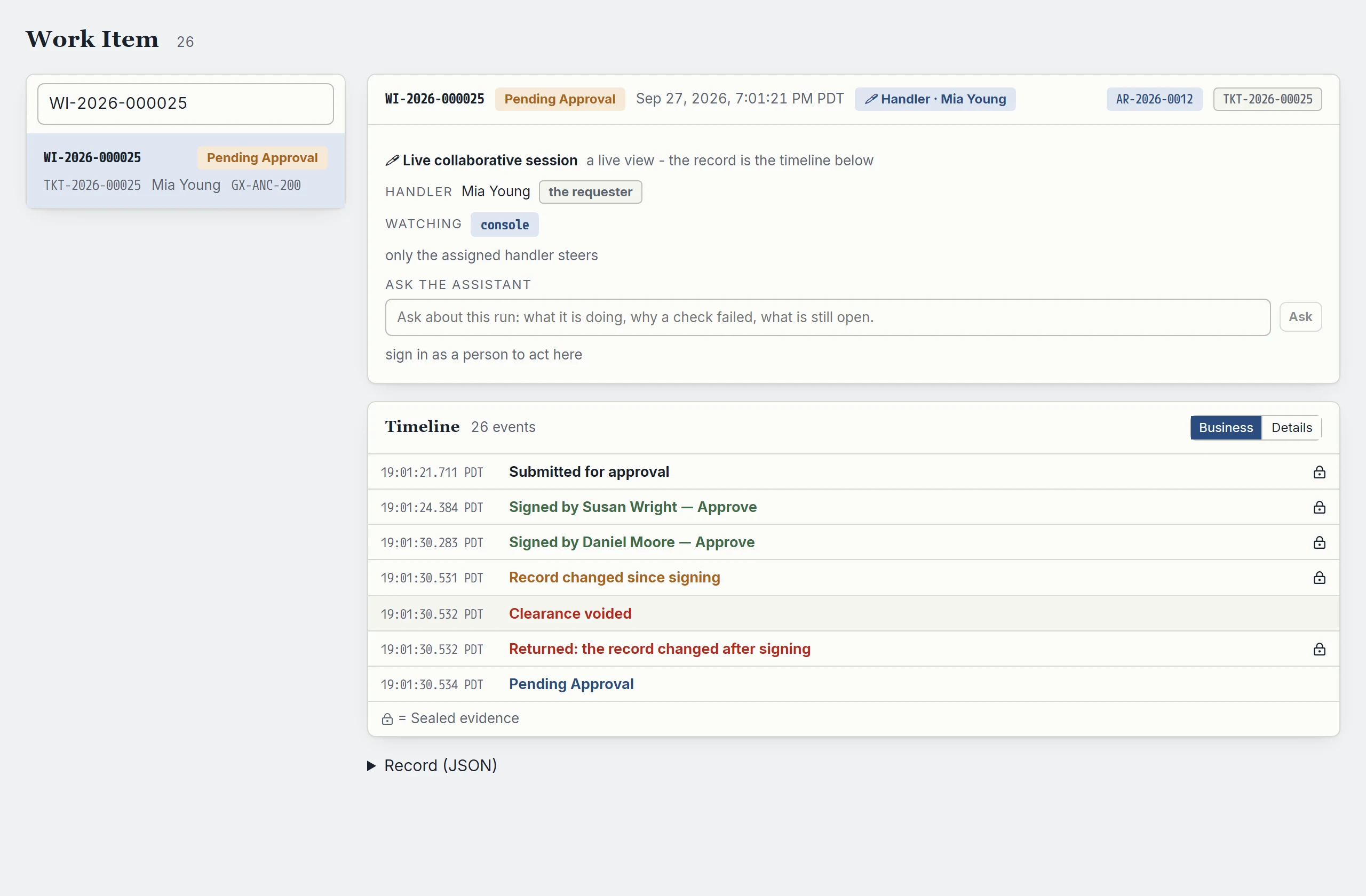
What do we need to start?
- Your pricing rules as they are: how deep a change each person may make.
- Seller API access for reading an offer and writing its price, held at the gateway.
- Who signs above each depth, by name or role.
- Employee sign-in through your identity provider, so the person proposing is who they say they are.
Related: refund approvals, CRM decision records, the glossary.
Questions this note answers
Who approves a price change on an Amazon listing?
The depth of the change decides. In the shipped playbook, a change inside -5% / +10% of the price the approver saw, on a listing with no flags, runs on its own with the approval request still on record; down to a fifth off, the person who runs the storefront signs; deeper, or on a flagged listing, the finance director signs too.
What if a repricer or a colleague changes the price after it is signed?
Right before the price is written, GembaOS reads the offer again and compares it with what the signers saw. If the price moved, the clearance is voided and the request goes back; nothing is written.
Does GembaOS stop a pricing error from reaching buyers?
It stops a price change from being written without the signatures its depth requires, and it keeps a record of who signed. It does not watch the marketplace for errors made outside GembaOS, and it does not decide what the right price is.
Last updated: · GembaOS v0.2